



Anatomy in Action: RGSPP Year 10 Students Master Digestive Biology
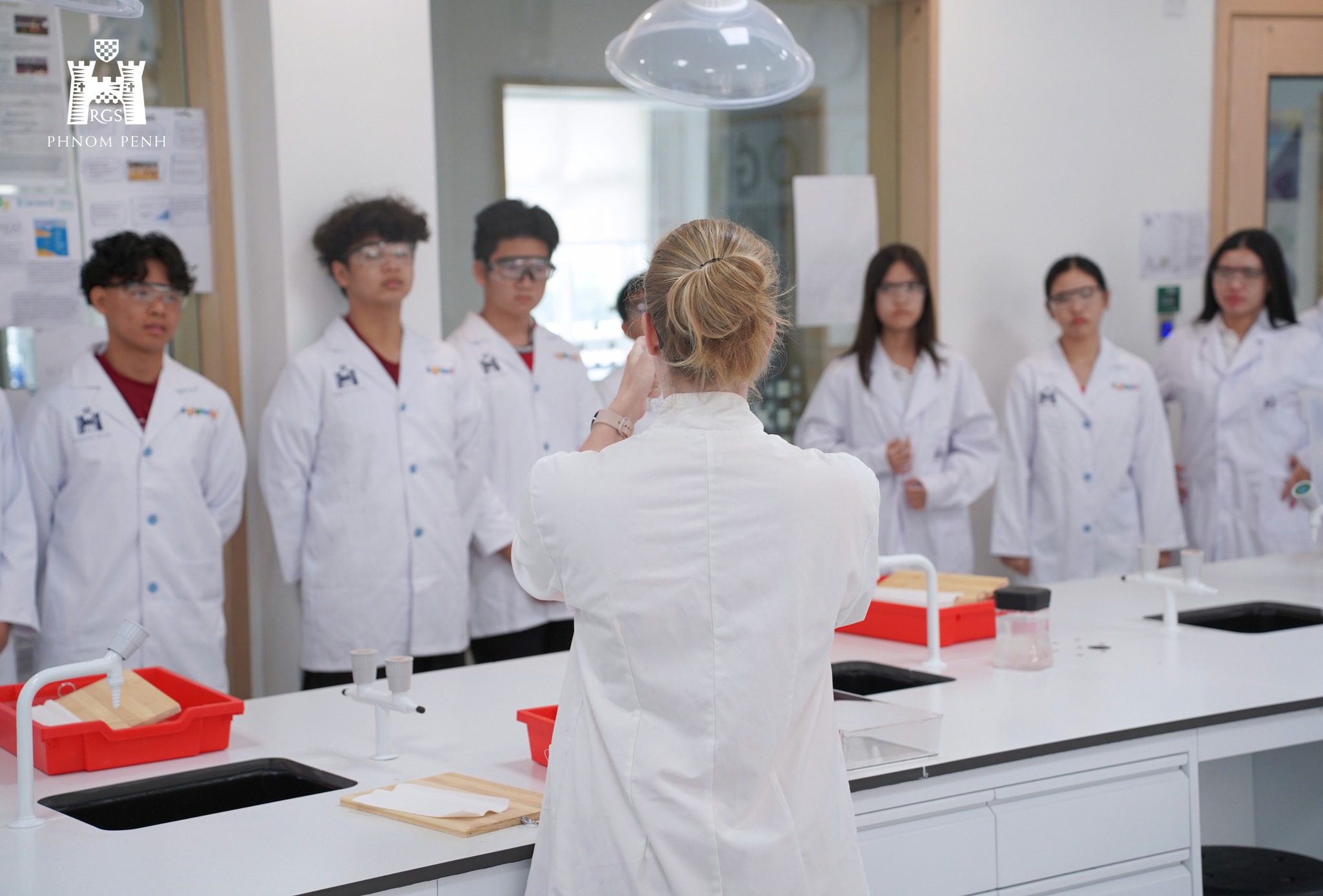
PHNOM PENH, March 4, 2026 — The Year 10 Biology lab at Reigate Grammar School Phnom Penh became a hub of surgical precision this week. As part of their intensive study of the digestive system, students moved beyond theory to perform a hands-on frog dissection, a cornerstone of the British secondary science curriculum.
The Science of Dissection
While a dissection can be an exciting “right of passage,” at RGSPP, it is a rigorous academic exercise designed to build several high-level competencies:
- Comparative Anatomy: By identifying the stomach, intestines, and liver of a frog, students can visualize the similarities and differences in the vertebrate digestive tract.
- Instrument Mastery: Students practiced the delicate handling of forceps and scalpels, developing the fine motor control essential for laboratory and medical careers.
- Observation & Analysis: Moving from “prior learning” to “real structures” requires students to look past the idealized versions in textbooks to see the complexity of real biological tissue.
A Culture of Curiosity
One of the most heartening moments of the session was the sight of Year 7 students peering into the lab, captivated by the work of their seniors. From our perspective at Schools Cambodia, this “cross-year curiosity” is a hallmark of a healthy academic environment:
- Peer Mentorship: Seeing older students handle complex practicals with confidence gives younger learners a clear goal to strive toward.
- Academic Rigor: This isn’t just “hands-on” fun; it’s a high-stakes environment where teamwork and safety protocols are strictly observed.
- The British Standard: As a Reigate Grammar School branch, the science department maintains the same high-level practical standards found in top-tier UK laboratories.
We congratulate the Year 10 “Future Scientists” at RGSPP for their focus and skill. At Reigate, science isn’t just about reading the results—it’s about performing the research.