


Geometry in Action: Orange Crest Preschool Students Explore the World of Shapes
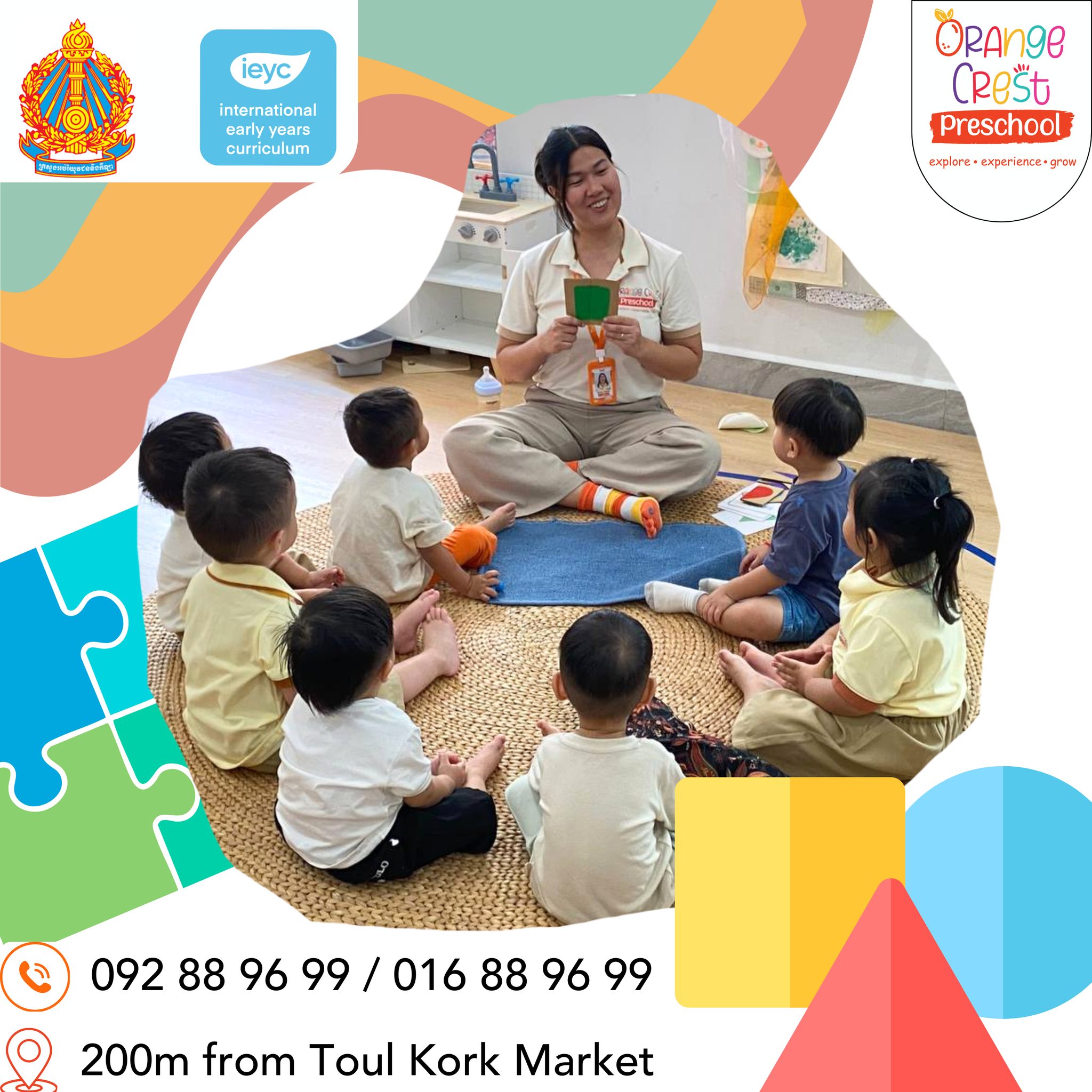
PHNOM PENH, March 4, 2026 — It was a day of “Lines, Curves, and Corners” for the youngest learners at Orange Crest Preschool as they dived into a multi-sensory exploration of shapes. This interactive lesson was designed to bridge the gap between English vocabulary and spatial awareness, proving that math and language are perfectly connected in early childhood development.
The Building Blocks of Literacy
While the students were busy identifying Circles, Squares, and Triangles, they were actually laying the foundation for future academic success.
- Shape Vocabulary: Students practiced the articulation of geometric names while discussing the specific properties of each shape—counting sides and identifying “pointy” corners.
- Spatial Reasoning: Through Shape Puzzles, children learned how individual pieces fit together to form a “whole,” a vital precursor to problem-solving and logical thinking.
- Applied Geometry: In a creative DIY Coaster session, the students transformed abstract shapes into functional art, seeing firsthand how geometry is used in everyday design.
Did You Know? Recognizing shapes is the first step toward reading! Most letters and numbers are simply a combination of circles and lines. A child who can spot a triangle can more easily recognize the letter “A” or the number “4.”
The Developmental “Shape” of Learning
From our perspective at Schools Cambodia, this lesson addresses three key areas of early childhood development:
- Fine Motor Skills: Sticking, placing, and fitting shapes together strengthens the small muscles in a child’s hands, preparing them for writing.
- Visual Discrimination: The ability to see the difference between a square and a rectangle is the same skill used to tell the difference between “b” and “d.”
- Creative Engineering: Making coasters showed the “Little Experts” that they have the power to build and create using the simple tools of geometry.