



From Users to Innovators: MoEYS Launches Computational Thinking Program in Primary Schools
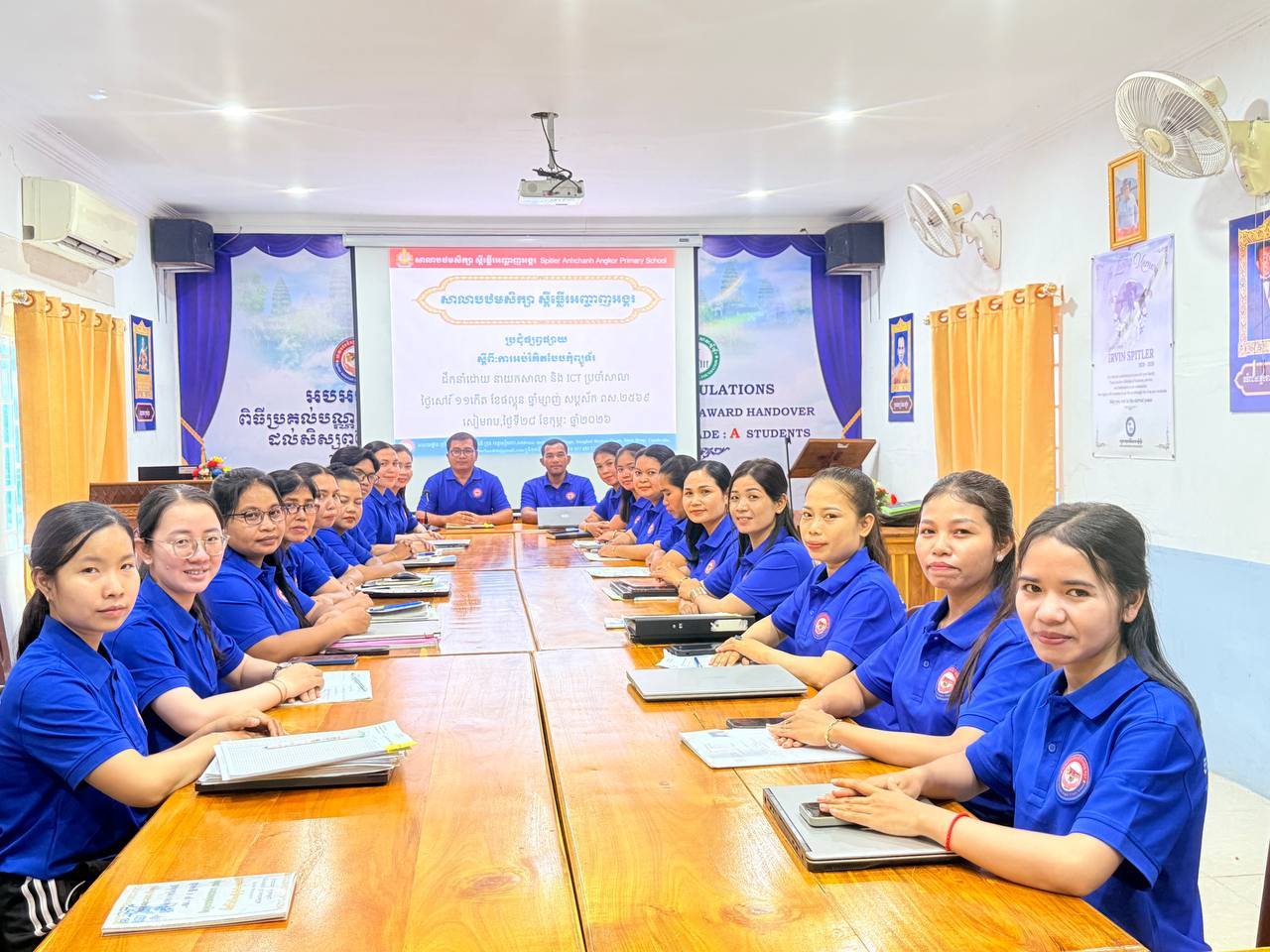
PHNOM PENH, March 3, 2026 — A significant shift in the Cambodian educational landscape is taking place at the grassroots level. School boards and teacher-leaders across target elementary schools in the capital have officially commenced strategic planning for the implementation of the “Computer Thinking Education Program.”
This initiative marks a departure from traditional “IT classes.” Instead of simply learning how to use software, students will now be taught Computational Thinking (CT)—the mental process involved in formulating problems and their solutions so that a computer can effectively carry them out.
The Four Pillars of Computational Thinking
The program is designed to equip young students with a specific set of cognitive tools essential for the 21st-century workforce:
- Decomposition: Breaking down a complex problem into smaller, more manageable parts.
- Pattern Recognition: Looking for similarities among and within problems.
- Abstraction: Focusing on the important information only, ignoring irrelevant details.
- Algorithms: Developing a step-by-step solution to the problem, or the rules to follow to solve the problem.
The Role of School Leadership
From our perspective at Schools Cambodia, the success of this digital evolution rests on the “active involvement” of school management. The current planning meetings demonstrate a high level of institutional ownership:
- Sustainable Implementation: School boards are ensuring that technology education is not a one-time event but a permanent part of the curriculum.
- Teacher Empowerment: Head teachers are leading the charge in professional development, ensuring their staff are confident in teaching logic and coding.
- Community Readiness: By starting at the elementary level, the program builds a strong foundation for “Digital Human Capital” before students even reach high school.
Changing Student Behavior
The ultimate goal of MoEYS is a behavioral shift. By teaching students to think like programmers, the Ministry is fostering:
- Logical Problem-Solving: Approaching challenges with a structured, step-by-step mindset.
- Innovation: Encouraging students to create their own digital tools rather than just using existing ones.
- Analytical Thinking: Questioning how systems work and how they can be improved.
We extend our deepest gratitude to the dedicated educators and school boards who are working tirelessly to make “Sustainable Digital Education” a reality in Cambodia.