



Succession & Corporate Rights: AUPP Law Faculty Leads the Legal Conversation
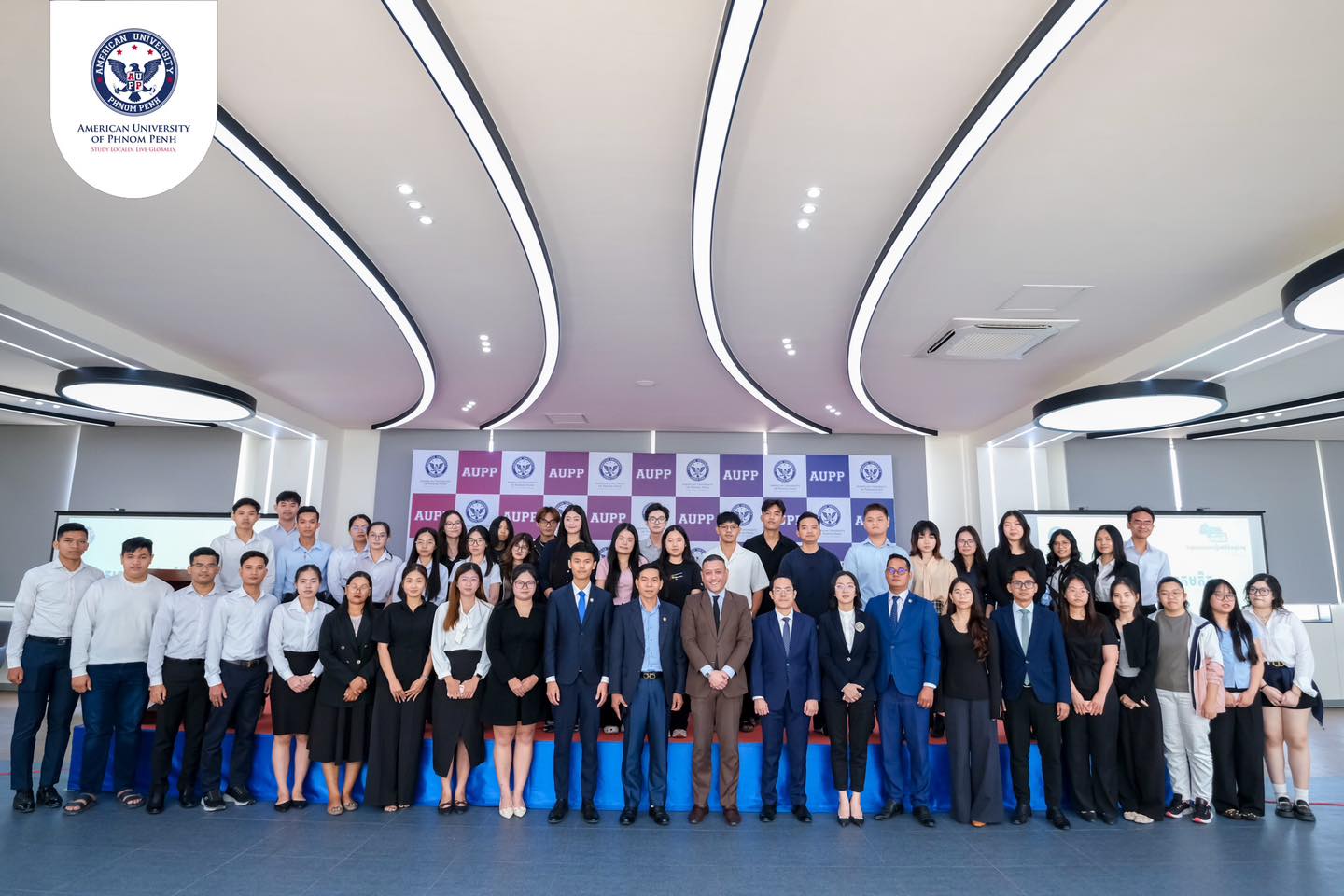
PHNOM PENH, February 15, 2026 — At a time when Cambodia’s economy is maturing and family-owned businesses are transitioning into formalized corporate entities, understanding the transfer of “Succession” and “Shares” has never been more vital.
The American University of Phnom Penh (AUPP), in an exclusive partnership with Contribution of Law (CL), hosted an intensive seminar to deconstruct these critical legal frameworks for law students and practitioners alike.
Decoding the Legal Frameworks
Under the guidance of Professor Hisham Mousar, Acting Dean of the AUPP Faculty of Law, the seminar addressed two of the most complex areas of Cambodian law:
1. The Law of Succession
Students explored the nuances of Statutory and Testamentary succession as defined by the 2007 Civil Code. The discussion focused on:
- Forced Heirship: Ensuring that spouses and children receive their legally secured portions of an estate.
- The Validity of Wills: Deconstructing the formal requirements for Notarial, Secret, and Privately Produced documents to prevent future litigation.
2. Share Law and Asset Transfer
The seminar also pivoted to the commercial side, examining how ownership in a company (shares) is treated during a legal transition.
- Shareholder Rights: Identifying how voting rights and dividends transition to a successor.
- Corporate Governance: Understanding the role of the Board of Directors during the “Opening of Succession.”
A Collaboration for Professional Growth
The event was sparked by the expertise of Ms. CHHUM Monysocheata and Mr. VAY Phireak, whose presentations offered a rare look at real-world case studies in Cambodia. The presence of Ms. TEP Bophal, co-founder of Contribution of Law, reinforced the university’s commitment to the Rule of Law by providing students with resources usually reserved for licensed attorneys.
By hosting these “impactful events,” AUPP ensures its graduates are not just “Study Locally” scholars but “Live Globally” professionals ready to handle international legal standards within a Cambodian context.