



Raising Research Standards: Dr. Lim Soktai Guides Civil Engineering Thesis Writing at Norton University
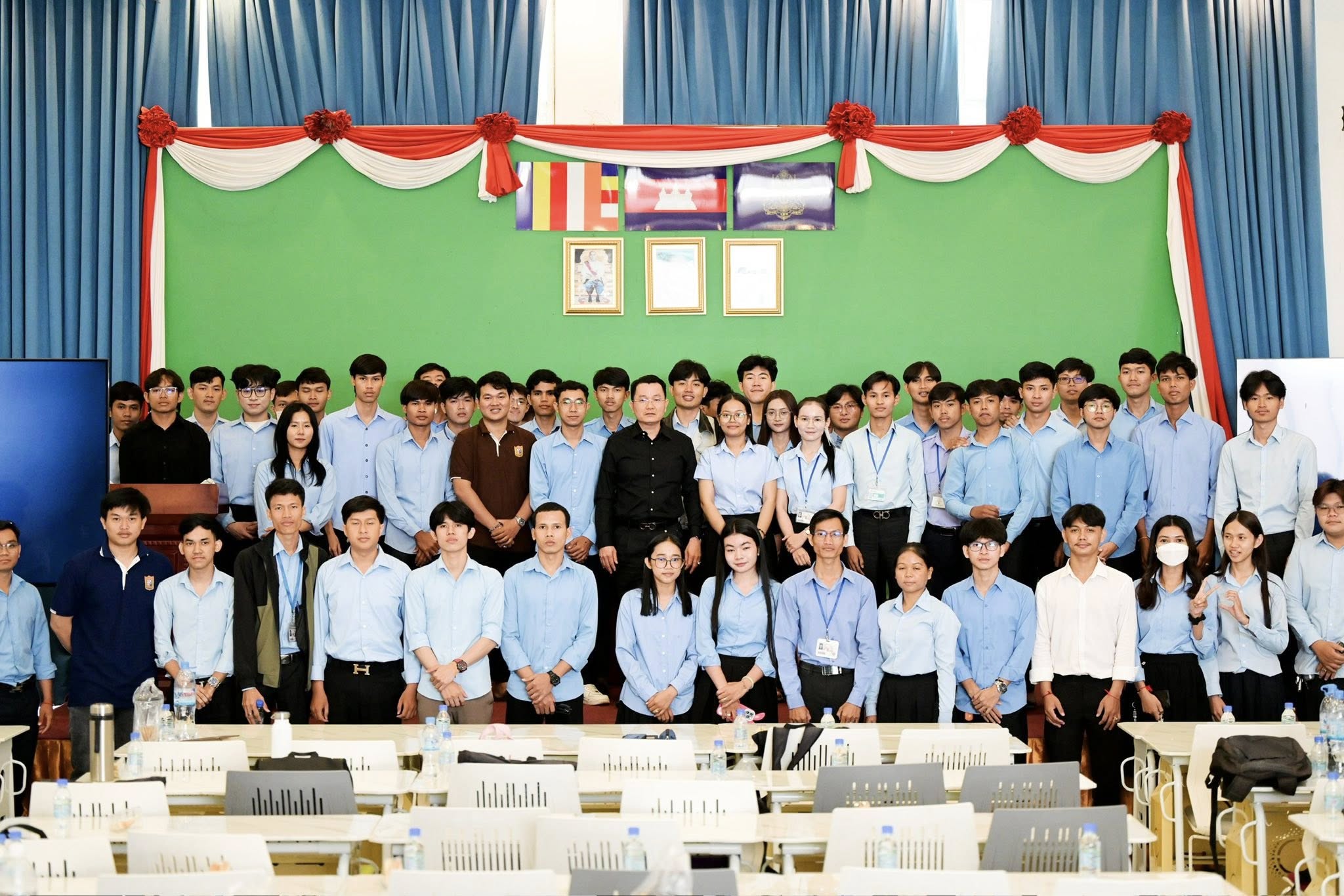
PHNOM PENH, February 21, 2026 — Aspiring engineers at Norton University have embarked on a critical phase of their academic journey. Dr. Lim Soktai, Honorary Senior and Academic Advisor of the College of Science, led a specialized workshop titled “How to write a thesis in the new Norton University format (APA7)” for the 22nd generation of Civil Engineering students.
Mastering the Foundation Chapter
The workshop focused specifically on the “Foundation Chapter” (Chapter 1), which sets the stage for the entire research project. Dr. Soktai emphasized that for a Civil Engineering thesis, the foundation is both literal and figurative—it must be grounded in precise data and formatted with academic integrity.
Key components discussed for the Foundation Chapter include:
- Problem Statement: Identifying specific gaps in current Cambodian construction or infrastructure practices.
- Research Objectives: Defining clear, measurable goals for the engineering study.
- Significance of the Study: Explaining how the thesis will contribute to the safety and development of the Kingdom’s infrastructure.
Transitioning to APA 7th Edition
The move to the APA 7th edition brings several modern updates to how students must present their work. For engineering students, this affects:
- Tables and Figures: New standards for labeling complex engineering diagrams and data sets.
- In-Text Citations: Simplified rules for citing multiple authors, allowing for cleaner technical writing.
- Bias-Free Language: Ensuring that professional reports use inclusive and precise terminology.
Why Writing Matters for Engineers
From our perspective at Schools Cambodia, the ability to write a high-quality thesis is a vital professional skill. In the workplace, engineers must be able to:
- Communicate Complex Data: Translating computations into clear reports for stakeholders.
- Ensure Regulatory Compliance: Writing in a standardized format mirrors the precision required for legal construction documents.
- Contribute to Innovation: Properly cited research helps build a collective knowledge base for the entire Cambodian engineering community.
We congratulate the 22nd generation of students and thank Dr. Lim Soktai for his expert mentorship in shaping the next wave of Cambodia’s structural leaders.